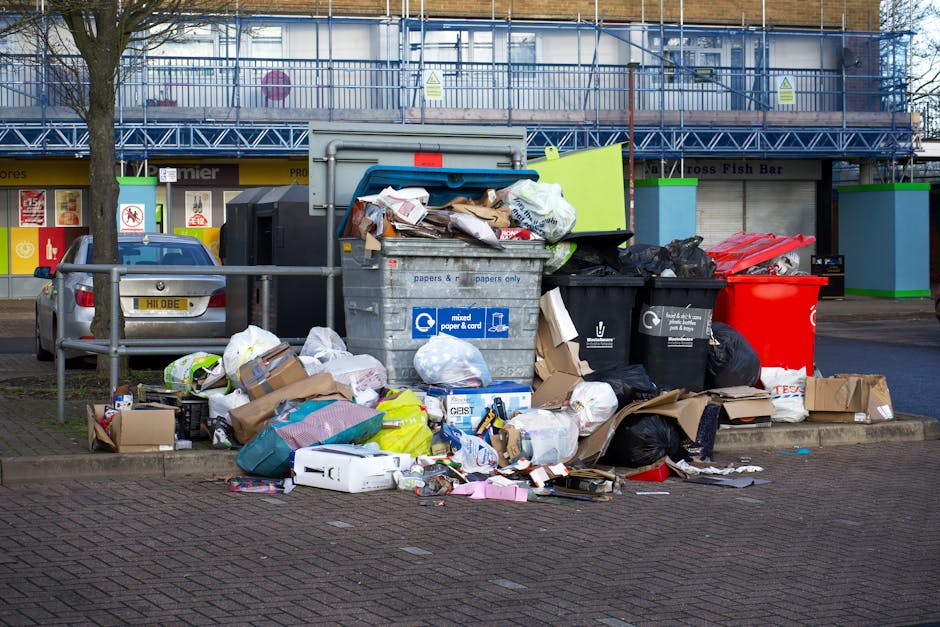
Avoid hidden rubbish removal charges in Leytonstone: a practical guide to clear, fair pricing
If you have ever booked a clearance and then felt that sinking moment when the final bill arrives, you already know why it pays to avoid hidden rubbish removal charges in Leytonstone. The job may look simple from the outside: a van turns up, the team loads everything, and the waste disappears. But the real cost can change fast if the quote was vague, the access was awkward, or the job included items nobody mentioned at the start.
This guide breaks down how pricing usually works, where surprise charges creep in, and what you can do before the team arrives to keep things transparent. It is written for homeowners, landlords, tenants, tradespeople, and business owners in Leytonstone who want a clean, straightforward service without the "oh, by the way..." at the end. Let's face it, nobody enjoys surprise fees. Especially not on a Tuesday afternoon with a hallway full of broken furniture.
For readers who want to compare pricing properly, it can also help to look at the company's pricing and quotes information alongside the job-specific service pages, such as waste removal or house clearance. That gives you a better sense of what is included and what may need extra discussion before booking.
Below, you will find the warning signs, the questions worth asking, and a simple step-by-step approach to getting a fair, honest rubbish removal price in Leytonstone.
Why hidden rubbish removal charges in Leytonstone matters
Hidden charges are more than just annoying. They make it hard to compare providers fairly, and they can turn a budget-friendly clearance into a stressful one. In practical terms, a quote that looks low at first may not include labour, loading time, disposal type, congestion, access issues, or heavier waste. Sometimes the price is technically "correct", but only after extra items are added. That is where confusion starts.
In Leytonstone, where streets can be busy, parking can be tight, and access varies from one property to the next, clarity matters even more. A small flat clearance above a shop is not the same as a front-drive garden clearance, and an honest provider should say that upfront. If they do not, you may pay for assumptions that were never checked.
There is also a trust angle. A transparent quote tells you a lot about how the company works. If the pricing is clear, the communication usually is too. If the price is slippery, the service can be as well. Not always, but enough times to be worth watching for.
Expert summary: the best way to avoid hidden rubbish removal charges in Leytonstone is to define the waste, show the access, ask what is included, and get the pricing confirmed before the crew starts loading.
How hidden rubbish removal charges in Leytonstone works
Most rubbish removal businesses price jobs based on a mix of volume, weight, labour, disposal costs, access, and time on site. That is normal. The problem begins when one of those parts is implied rather than explained.
Here are the most common ways hidden charges appear:
- Volume-based pricing that changes on arrival because the waste takes up more space than expected.
- Weight surcharges for dense materials such as soil, rubble, tiles, wet green waste, or mixed builders' waste.
- Labour extras when items are carried down stairs, through narrow halls, or from an awkward rear garden.
- Parking or access issues that were not mentioned before the visit.
- Special item fees for appliances, mattresses, fridges, or other items that need different handling.
- Minimum load charges that apply even if you only have a small amount of rubbish.
That does not mean every extra fee is unfair. A clear extra charge is fine if it was stated before the work started. Hidden charges are the ones that appear late, unexplained, and with very little room to question them. That is the line to keep in mind.
If your job is closer to a furniture-heavy clearance, it can help to check service pages such as furniture clearance or furniture disposal so you understand how bulky items are usually treated. For lofts, garages, and property-wide clearances, loft clearance and garage clearance can also give useful clues about what details matter most.
Key benefits and practical advantages
The main benefit of avoiding hidden rubbish removal charges is obvious: you keep control of your budget. But there are a few other practical advantages that are easy to overlook.
- Better comparisons between providers, because you are comparing like with like.
- Less stress on the day, since the team arrives knowing what to expect.
- Fewer disputes after the work is finished.
- Faster jobs, because the crew does not need to pause and renegotiate halfway through.
- More accurate planning for landlords, agents, trades, and businesses.
There is also a quality-of-service benefit. A team that takes the time to explain pricing usually takes the time to handle the clearance properly. That is not a hard rule, but in real life it is a decent signal.
If sustainability matters to you, it is worth reviewing a company's approach to recycling and sustainability. Transparent pricing and responsible disposal often go hand in hand, because both depend on knowing what is being collected and where it is going.
Who this is for and when it makes sense
To be fair, almost anyone booking waste collection can benefit from this advice, but some groups need it more than others.
- Homeowners clearing clutter after a renovation, move, or spring reset.
- Tenants trying to leave a flat tidy without losing money to unclear charges.
- Landlords and letting agents dealing with end-of-tenancy clearances.
- Tradespeople and builders managing mixed debris from small jobs.
- Business owners clearing offices, stock rooms, or commercial waste.
- Older residents or families who want the job handled carefully and respectfully.
The need is especially strong when the waste is mixed or the property is awkward to access. A neat curb-side pile is one thing. A top-floor flat with no lift is another. A garage full of odd-sized items, damp cardboard, and one battered sofa? That is where pricing can drift if nobody has inspected the load properly.
For business users, the same logic applies to business waste removal and office clearance. Small variations in waste type or access can change the work involved quite a lot, so a detailed quote is genuinely worth the effort.
Step-by-step guidance
If you want a reliable way to keep rubbish removal pricing transparent, use this simple process.
- List exactly what needs removing. Include bulky items, loose waste, mixed bags, and anything heavy.
- Note access details. Stairs, narrow passages, basement rooms, rear gardens, parking restrictions, and shared entrances all matter.
- Separate normal waste from special waste. Builders' rubble, soil, timber, old appliances, and furniture may be priced differently.
- Ask what the quote includes. Loading, labour, disposal, VAT if relevant, and parking should all be clear.
- Request any likely extras in writing. If there may be heavy lifting or extra time, ask how that is handled.
- Confirm the expected collection method. Is it a full van load, a partial load, or a fixed-price itemised job?
- Get the final agreement before the job begins. Do not leave pricing discussions until the truck is half full. That is a bad time. Really bad.
A useful habit is to take a few photos before booking. A couple of pictures from the doorway, plus one wide shot of the whole pile, can prevent a lot of confusion. Nothing fancy. Just enough to show scale.
If your clearance is mainly domestic, pages like home clearance and flat clearance can help you think through the sort of items and access details you should mention early. That small bit of preparation can save a surprisingly large headache later.
Expert tips for better results
Here are the tips that tend to make the biggest difference in real bookings.
Be precise, not vague
"A bit of rubbish" is not enough detail. Say whether it is bagged waste, broken furniture, renovation debris, or garden cuttings. The more specific you are, the more useful the quote.
Mention awkward items early
Mattresses, fridges, wardrobes, paint tins, and mixed builders' waste are the usual suspects. They are often manageable, but they are not the same as loose household rubbish.
Ask how access changes the price
If the team has to carry items up or down multiple flights, through a basement, or around the back of a property, ask whether that affects the price. Good companies explain this before the day arrives.
Check whether the quote is fixed or estimated
A fixed quote gives you more certainty. An estimate can still be fine, but only if you know what might change it.
Keep the job tidy before collection
If you can group the waste neatly, do it. It helps the crew assess the load quickly, and sometimes that alone reduces time on site. No miracle, just common sense.
For larger or more specialised clearances, it can also help to read about builders waste clearance and garden clearance. Those jobs often have their own pricing quirks, especially when heavy or mixed materials are involved.
Common mistakes to avoid
Most surprise charges come from one of a handful of avoidable mistakes. The good news? They are usually easy to prevent.
- Accepting a quote without asking what is included.
- Hiding difficult access details because you think they will "figure it out later".
- Forgetting about heavy or special items that change the disposal route.
- Comparing only the cheapest headline price instead of the full service.
- Assuming every company prices the same way. They do not.
- Leaving the final discussion until the van is on the drive. That usually helps nobody.
Another subtle mistake is not checking the company's service standards. It is sensible to review pages such as insurance and safety and health and safety policy because good pricing is only half the picture. A cheap job that creates risk is not actually cheap.
And yes, people do sometimes assume all waste is the same. It is not. Wet green waste, old bricks, upholstered furniture, and mixed rubbish each behave differently in the truck and at disposal. Small detail, big difference.
Tools, resources and recommendations
You do not need a toolkit full of special software to avoid hidden rubbish removal charges. A few simple resources are enough.
- Phone photos of the waste pile and access route.
- A rough list of items by type and quantity.
- Measurements for large items like sofas, wardrobes, or builders' waste piles.
- Notes about parking, stair access, and entry restrictions.
- A written quote or clear message summary before the booking is confirmed.
If you are dealing with payment questions, it is sensible to review payment and security. Clear payment terms are part of transparent pricing, and they help reduce the awkwardness that can happen when the job is finished but the invoice is still unclear.
One more useful recommendation: check whether the provider has straightforward company information. A clear about us page and easy-to-find terms can be a reassuring sign that the business expects customers to ask sensible questions. That is a good thing, not a red flag.
Law, compliance, standards, or best practice
While this article is about pricing rather than law, compliance still matters. In the UK, waste carriers should be operating responsibly, and customers should be cautious about who handles their rubbish. You do not need to become a compliance expert, but you should expect lawful disposal, sensible handling, and clear communication.
Good practice usually includes:
- explaining what waste is being removed;
- confirming how it will be loaded and transported;
- being clear about any extra charges before work starts;
- handling items safely, especially heavy or awkward ones;
- disposing of waste through proper channels rather than cutting corners.
For larger jobs, especially commercial or mixed waste, it is reasonable to ask how the provider manages sorting, recycling, and disposal. The company's recycling and sustainability information can give you a sense of whether they think beyond the first pickup. That matters, because hidden costs sometimes show up when a provider has not planned disposal properly in the first place.
Also, do not be shy about asking for proof of business terms or insurance coverage if the job is substantial. A professional company should expect that question. It is normal. It is sensible. It is exactly what a careful customer should do.
Options and comparison table
Not every clearance needs the same approach. The table below compares the most common ways people book rubbish removal in Leytonstone.
| Option | Best for | Risk of hidden charges | What to check |
|---|---|---|---|
| Rough phone estimate | Very simple, small loads | Medium | Ask what happens if the load is bigger or heavier than expected |
| Photo-based quote | Most household and flat clearances | Lower | Make sure the photos show access as well as waste |
| On-site assessment | Large, mixed, or awkward jobs | Lowest if done properly | Confirm whether the site visit is free and whether the price is fixed |
| Single-item collection | Furniture, appliances, one-off items | Low to medium | Check if stairs, carrying distance, or special disposal adds cost |
In practice, the safest choice is usually the one that gives the provider enough information to price the job confidently before arrival. That is why photo quotes and site visits tend to work well for anything more complicated than a few bin bags.
Case study or real-world example
Here is a simple real-world-style example from the kind of job that often happens in Leytonstone.
A resident in a first-floor flat needed old furniture, bagged clutter, and a few bits from a storage cupboard removed. The first quote they received was low, but it was based only on "some household waste". After a quick call, they explained there were two wardrobes, a sofa, several mixed bags, and a narrow stairwell with limited parking outside. The price changed, but importantly, it changed before the booking was confirmed.
That small pause saved the awkward part. No surprise invoice. No debate at the door. The team turned up, the load matched the quote, and the job was finished in one visit. Fairly ordinary, really - which is exactly how good rubbish removal should feel.
Now compare that with the version where nobody mentions the stairwell or bulky items until the crew has already started loading. That is where hidden charges tend to appear. Not because someone is trying to be difficult, but because the job was never described properly in the first place. Still, the result is the same: stress.
Practical checklist
Use this checklist before you book:
- List every item or waste type you want removed.
- Take clear photos of the waste and the access route.
- Measure bulky items if you are unsure.
- Mention stairs, parking limits, rear access, or shared entrances.
- Ask whether the quote includes labour, loading, and disposal.
- Ask about extra charges for heavy, awkward, or special items.
- Confirm whether the price is fixed or only an estimate.
- Check payment terms before you agree.
- Keep a written summary of the agreement.
- Review related service information if your job is specialised, such as house clearance or office clearance.
That is the short version. Simple, but effective.
If you are comparing providers, you may also want to read the company's terms and conditions and complaints procedure. You probably hope never to need the second one, of course, but it is comforting to know how a business handles things if something does go off track.
Conclusion
Avoiding hidden rubbish removal charges in Leytonstone is mostly about clarity, not luck. When you describe the job well, ask direct questions, and confirm the details before collection, you give yourself the best chance of getting a fair price and a calmer experience.
Think of it like this: a good rubbish removal service should feel organised from the first message to the last sweep of the pavement. No mystery fees. No last-minute pressure. Just a clear job, done properly, and one less thing cluttering your week. And honestly, that is a relief.
Get a free quote today and see how much you can save.
If you are ready to talk through a clearance in more detail, the easiest next step is to use the site's contact us page and explain exactly what needs removing. A few honest details at the start can save you time, money, and a bit of unnecessary faff later.
Frequently Asked Questions
What are hidden rubbish removal charges?
They are extra fees that were not clearly explained before the job started. They might relate to access, heavy items, disposal type, or labour time. The problem is not always the fee itself; it is the surprise.
How do I stop surprise charges when booking rubbish removal in Leytonstone?
Give a full description of the waste, mention access problems, ask what is included in the quote, and confirm whether the price is fixed. Photos help a lot too.
Is the cheapest quote usually the best choice?
Not always. A very low headline price can leave out loading, disposal, or difficult access. Compare the full offer, not just the first number you see.
Should I get a quote in writing?
Yes, if possible. A written quote or message summary makes it much easier to avoid confusion later. It does not need to be fancy; it just needs to be clear.
Do stairs or parking issues usually cost extra?
They can, depending on the provider and the amount of work involved. That is normal if it is explained in advance. The issue is when it appears only after arrival.
Are bulky furniture items priced differently?
Often, yes. Sofas, wardrobes, mattresses, and other large items may take more time and space than loose waste. If you are removing furniture, it is worth checking the service details first.
What should I say when asking for a quote?
Say what the waste is, how much there is, where it is located, and how easy it is to access. If there are heavy items or special materials, mention those too.
Can a rubbish removal team change the price on the day?
They can, if the job turns out to be different from what was described. That is why accurate information matters so much. If the original details were clear, you have more room to challenge a change.
Do I need to separate waste before collection?
It is not always required, but separating waste can make the job easier and sometimes cheaper. It also helps the team assess the load properly. Mixed waste is usually harder to price.
Are recycling and disposal costs included in the quote?
They should be made clear. Ask whether disposal is included, whether different waste types carry different costs, and how the company handles recycling. That is a fair question.
What is the safest way to compare rubbish removal companies?
Compare like for like. Check what is included, whether the quote is fixed, how they handle access issues, and whether they provide clear information on payment and terms. A bit of extra checking now can save hassle later.
When does a site visit make sense?
A site visit is most useful for large, mixed, or awkward jobs where photos and descriptions may not tell the full story. It is also helpful for flats, basements, lofts, and busy properties where access can affect the work a lot.
For more details about how the business presents its services and commitments, you can also review the about us page and the wider recycling and sustainability information. Those pages can help you judge whether the service feels transparent and well run.